
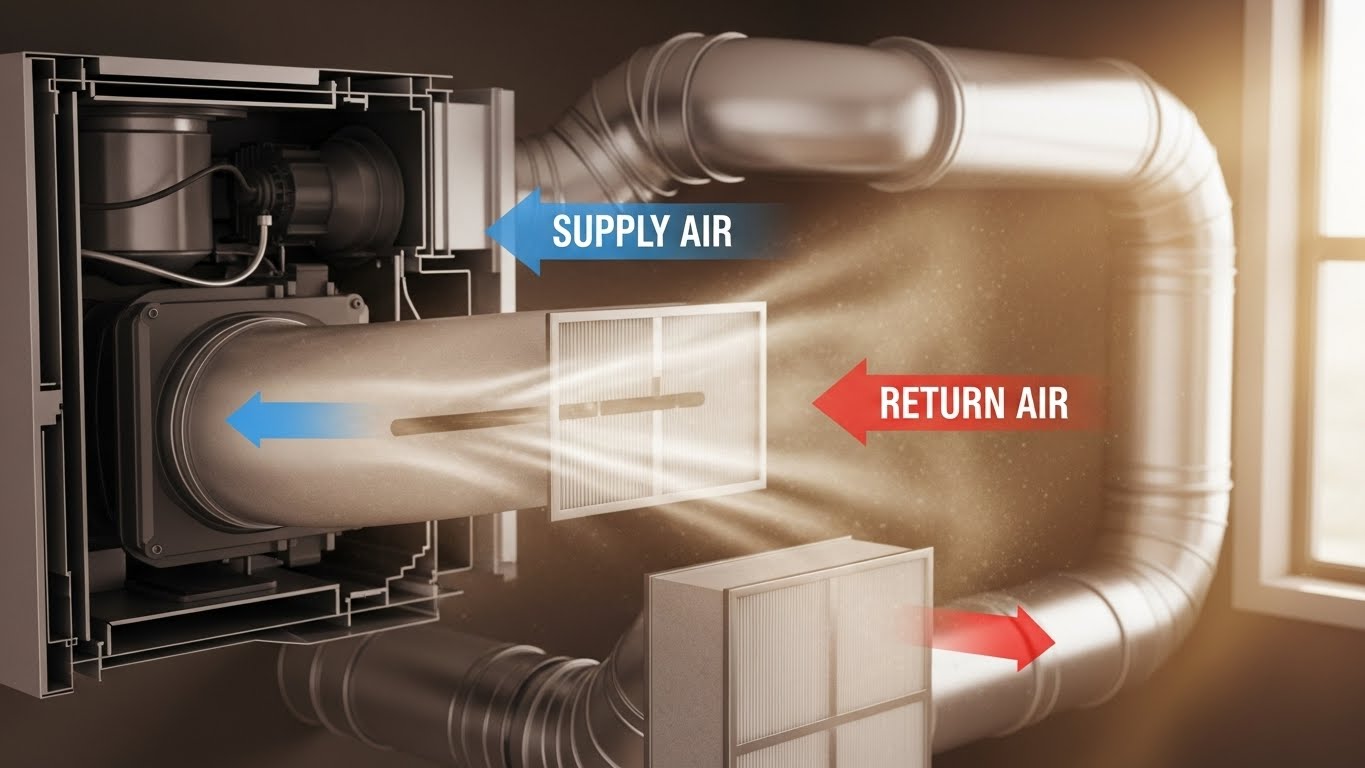
Air feels cleaner when your home looks clean. But dust seems to find its way back no matter how often you swipe, vacuum, or mop. So let’s answer the big question homeowners keep asking: does air duct cleaning reduce dust?
Short answer: It can help, sometimes more than you’d expect especially if your ducts are dirty, leaky, or you’ve had recent renovations. But in many homes, most dust comes from everyday living and outdoor air, not just the ducts. The best results come from a combo of duct hygiene, good filtration, and smart cleaning habits.
Quick Answer: How Duct Cleaning Affects Dust
If your ducts contain a lot of debris, pest remnants, construction dust, or visible buildup, professional air duct cleaning can reduce the amount of dust that settles on surfaces. You may notice cleaner vents, fewer dust bursts when the system starts, and less frequent wiping of furniture for several weeks or months after.
However, ducts are only one piece of the puzzle. Studies and consumer guidance (including from agencies like the EPA) indicate that routine duct cleaning doesn’t guarantee better air quality or major dust reduction if your ducts are already relatively clean and your home is well-filtered. In those cases, source control, better filtration, and sealing leaky return ducts often produce bigger, longer-lasting results.
Bottom line: Duct cleaning can reduce dust most effectively when it’s part of a broader plan.
How Dust Actually Builds Up in a Home
Here’s the thing: Dust isn’t a single thing. It’s a mix of fibers, skin cells, soil, pet dander, pollen, soot, and tiny particles from cooking and candles. It collects on shelves, baseboards, vents, and screens, and it floats in the sunshine when you open the blinds.
To reduce dust, it helps to know where it comes from.
Everyday indoor sources
- People and pets: Skin cells, hair, dander, fabric lint.
- Textiles: Carpets, blankets, and clothing shed fibers.
- Cooking and candles: Fine particles drift and settle.
- Cleaning itself: Dry dusting can kick particles into the air without capturing them.
Outdoor and structural sources
- Open doors and windows: Pollen and soil ride in on shoes and air currents.
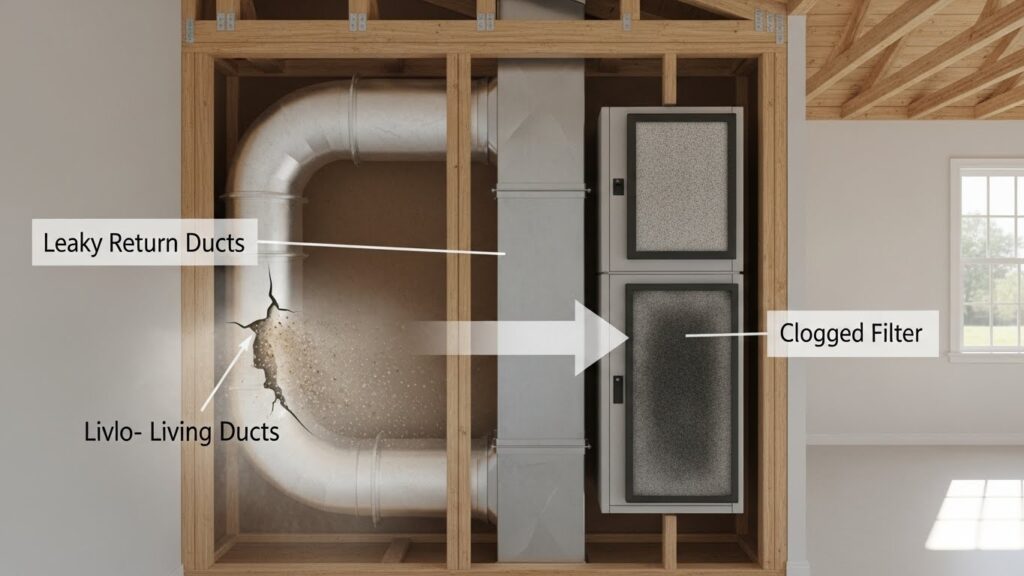
- Leaky return ducts: They can suck dusty air from attics or crawl spaces.
- Poor filtration: A low-MERV or clogged filter lets more dust circulate.
- Pressure imbalances: Exhaust fans and duct leakage can pull in unfiltered air.
If your home has leaky return ducts, every time your HVAC fan runs it can pull dusty air from unconditioned spaces. That dust then settles in ducts and rooms. In that case, duct cleaning may help in the short term, but sealing those returns will make the bigger difference.
What Happens Inside Air Ducts
Your ducts carry conditioned air to each room. Over time, a thin layer of dust often accumulates on the interior surfaces especially near supply registers and the return plenum. Small amounts typically stay put. But there are times when buildup becomes a problem.
When duct buildup matters
- Post-renovation debris: Drywall and sawdust can coat ducts quickly.
- Pest contamination: Droppings or nesting material indicate a health concern.
- Visible dust plumes: If you see bursts of dust when the system starts, it’s a clue.
- Odors and discoloration: Persistent smells or black streaks around vents suggest issues.
- Mold growth: Moisture in ducts or on coils can support growth under the right conditions.
A proper HVAC cleaning includes more than just the ducts. Coils, the blower, and the return plenum also affect airflow and dust distribution. If the cleaner ignores these components, dust problems can return quickly as air passes over dirty parts.
Evidence and Guidance: What Research Says
Authoritative guidance generally aligns on a nuanced view:
- Routine duct cleaning isn’t always necessary and doesn’t guarantee improved health outcomes in otherwise clean systems.
- Targeted cleaning makes sense when there’s significant debris, moisture issues, vermin, or after major construction.
- Improvements are most notable when duct dust is a clear source of surface dust or when cleaning is paired with better filtration and sealing work.
Real-world experience backs this up. Homes with heavy renovation dust or leaky returns often see a noticeable reduction in dusting frequency after a professional cleaning. Homes with minimal duct dust and good filters see smaller changes.
When Duct Cleaning Works (and When It Won’t)
Likely to help
- You’ve just finished remodeling, sanding, or drywall work.
- Your supply registers show visible dust and you see puffs at startup.
- You smell odors from vents or suspect pests.
- Your return duct is pulling air from an attic, garage, or crawl space.
- Family members experience irritation that correlates with system operation.
Unlikely to be a game-changer
- Your ducts were recently installed or inspected and look clean.
- You use a high MERV filter, change it on schedule, and have no leakage.
- You don’t notice visible dust at vents or dust bursts when the fan starts.
In the first set of cases, cleaning can reduce circulating dust and surface buildup. In the second, your best gains come from filtration, housekeeping, and sealing.
Common Mistakes That Make Dust Worse
It’s frustrating to clean and watch the dust return in a day or two. These mistakes can be the culprits:
- Neglecting the filter: Clogged, low-MERV, or poorly fitted filters allow bypass and recirculation.
- Dry dusting: Feather dusters launch particles into the air. Use damp microfiber instead.
- Leaky returns: Gaps at the return plenum or filter slot suck in dusty air.
- Vacuum without HEPA: Standard vacuums can aerosolize fine dust.
- Ignoring humidity: Air that’s too dry or too humid affects static and particle behavior.
- Skipping entry mats: Dirt rides in on shoes more than you think.
Fixing these often cuts dust more than any single deep clean.
Best Practices to Reduce Dust (With or Without Duct Cleaning)
Whether you schedule a duct cleaning or not, these steps shrink dust at the source and keep more particles out of your breathing zone.
1) Upgrade your HVAC filter
- Choose a high quality pleated filter rated MERV 11–13 if your system can handle it.
- If you’re unsure about compatibility, ask an HVAC pro to check static pressure.
- Replace on schedule usually every 1–3 months, more often with pets or heavy use.
How to choose the right MERV filter
2) Seal duct leaks and the return plenum
- Seal obvious gaps at the return and supply connections with mastic or UL-181 foil tape.
- Pay special attention to the filter slot use a cover or gasket to prevent bypass.
- Consider professional duct sealing if leakage is widespread.
3) Run the fan strategically
- Use the “circulate” setting to move air through your filter for part of the day.
- During pollen season, extra filtration time can reduce what settles on surfaces.
4) Clean with capture methods
- Dust with damp microfiber cloths to trap particles, not launch them.
- Vacuum carpets and rugs weekly with a sealed HEPA vacuum.
- Launder bedding and washable textiles regularly.
What is a HEPA filter (Wikipedia)
5) Control entry points and humidity
- Place large, textured doormats inside and outside exterior doors.
- Ask guests to remove shoes.
- Keep indoor relative humidity around 40–50% to reduce static and particle suspension.
6) Consider targeted duct cleaning
- If your home fits the “likely to help” profile, book a professional.
- Include cleaning of coils, blower, and return plenum for best results.
Choosing a Reputable Duct Cleaning Company
Not all services are equal. A top tier duct cleaning prevents messes, protects your equipment, and actually captures dust rather than just stirring it up.
- Look for NADCA certification and ask about their process.
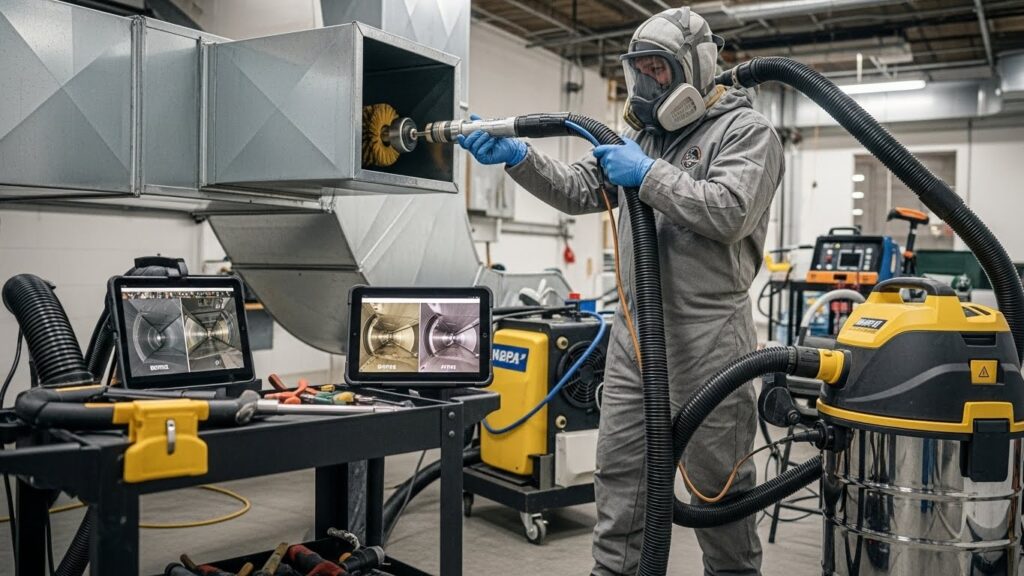
- Ensure they use negative-pressure equipment with HEPA filtration.
- Ask if they clean coils, blower, and the return plenum not only supply runs.
- Request before/after photos and a written checklist.
- Confirm they protect registers, supply lines, and your home with drop cloths and containment.
- Be wary of coupon level prices that seem too good to be true.
Find a NADCA-certified cleaner
Cost, Timing, and What to Expect
A thorough whole-home duct cleaning typically takes 3–6 hours, depending on home size and system complexity. Expect technicians to set up negative pressure, access ducts through registers and service openings, brush and vacuum lines, and clean the blower and coils if included in the scope.
- Typical cost: $400–$900 for a single system, more for large homes or multiple systems.
- Prep your space: Clear access to vents and the furnace/air handler.
- After the job: You may see a little residual dust for a day while settled particles are captured by filtration change your filter after the service if recommended.
For most homes, cleaning is an occasional service, not a routine annual task. Consider it after renovations, if you see signs of contamination, or every few years if your home tends to accumulate dust quickly.
Real-World Snapshot: When Cleaning Made a Difference
Maya and Alex renovated their living room new floors, fresh paint, and recessed lighting. For weeks after, they noticed a fine gray film on the coffee table a day after dusting. Each time the AC started, a small puff came from the nearest vent.
A local pro inspected their system, found construction dust piled in the return plenum, and traced a gap around the filter slot. They sealed the return, upgraded to a MERV 13 filter, and performed a full duct, blower, and coil cleaning.
The result? The “one-day dust” turned into a “three- to four-day dust,” and the puffs disappeared. They still need to clean everyone does—but the cycle slowed, and the air felt calmer. Changes like these are realistic: not magic, but meaningful.
Pros and Cons of Air Duct Cleaning for Dust Reduction
Pros
- Reduces circulating debris when ducts are contaminated.
- Cuts visible dust at vents and on nearby surfaces.
- Helps after renovations, pest issues, or moisture problems.
- Can boost HVAC efficiency when paired with coil/blower cleaning.
Cons
- Limited benefit if ducts are already clean and filtration is strong.
- Results fade if return leaks and poor filters remain unfixed.
- Low-quality cleanings can just stir up dust.
- Cost varies and add-ons can inflate the bill.
Key Takeaways
- Duct cleaning can reduce dust especially after renovations, with visible buildup, or when returns are leaky.
- The biggest wins come from pairing cleaning with high-MERV filtration and sealing work.
- Everyday habits matter: HEPA vacuuming, microfiber dusting, humidity control, and smart fan use.
- Choose reputable pros and insist on negative-pressure, HEPA equipment, and full-system cleaning.
Frequently Asked Questions About Air Duct Cleaning and Dust
Will air duct cleaning stop dust from coming back?
It’ll help if your ducts are a major dust source, but it won’t stop dust entirely. Most dust comes from people, pets, textiles, and outdoor air. Combine cleaning with better filtration and source control to see the biggest change.
How often should I clean my air ducts to reduce dust?
There’s no one-size schedule. Consider cleaning after renovations, if you see visible debris, or every few years if dust builds quickly. If your ducts are clean and filtration is solid, you may not need it for a long time.
Is duct cleaning worth it if I already use a high-MERV filter?
Sometimes, yes. A MERV 11–13 filter catches a lot, but it can’t remove debris already sitting in the ducts or return. Cleaning plus a great filter and sealing any leaks delivers the best long-term dust reduction.
Can dirty ducts make allergies worse?
They can, especially if there’s mold, pests, or heavy dust. Cleaning can reduce triggers when ducts are contaminated. But allergies also respond to whole-home strategies: HEPA vacuuming, allergen covers, and humidity control.
What’s the difference between “cheap” and professional duct cleaning?
Professional services create negative pressure, brush and vacuum ducts, and use HEPA filtration to capture debris. Low-cost “blow and go” services may just dislodge dust without capturing it, or skip critical components like the blower and coils.
Helpful Resources and Next Steps
- [LINK: EPA guidance on duct cleaning -> https://www.epa.gov/indoor-air-quality-iaq/should-you-have-air-ducts-your-home-cleaned]
- [LINK: Find a NADCA-certified cleaner -> https://nadca.com/homeowners]
- [LINK: How to choose the right MERV filter -> https://www.energy.gov/energysaver/maintaining-your-air-conditioner]
- [LINK: What is a HEPA filter (Wikipedia) -> https://en.wikipedia.org/wiki/HEPA]
- [LINK: Post-renovation cleaning checklist -> https://www.houzz.com/magazine/post-renovation-cleaning-checklist-stsetivw-vs~1234567]
Conclusion: So, does air duct cleaning reduce dust?
Yes when ducts are dirty or returns are leaky, professional cleaning can noticeably reduce dust on surfaces. For durable results, pair it with a high-MERV filter, sealed returns, and smart cleaning habits. If you’ve just remodeled or see visible buildup, cleaning is a smart move. If your system is clean and well filtered, focus on source control and filtration first.
Want cleaner air and fewer dust days between wipes? Start with a filter upgrade and return sealing, then book a reputable cleaning if you see the signs. Your home will look and feel fresher.
Call to Action
Ready to cut your dust without the guesswork? Get a quick HVAC check, upgrade your filter, and request quotes from NADCA-certified pros. Compare scopes, ask for before/after photos, and choose a team that cleans the entire system ducts, blower, and coils. Your next dusting day can be days, not hours, away.