
Table of Contents
- [Overview: Can You Stay Home?](#overview-can-you-stay-home)
- [Is It Safe to Stay Home During Duct Cleaning?](#is-it-safe-to-stay-home-during-duct-cleaning)
- [Who Should Consider Stepping Out](#who-should-consider-stepping-out)
- [How to Prepare Your Home (30-Minute Checklist)](#how-to-prepare-your-home-30-minute-checklist)
- [What Actually Happens During Professional Duct Cleaning](#what-actually-happens-during-professional-duct-cleaning)
- [Health, Safety, and Air Quality Tips](#health-safety-and-air-quality-tips)
- [Time, Cost, and After-Service Expectations](#time-cost-and-after-service-expectations)
- [Common Mistakes to Avoid](#common-mistakes-to-avoid)
- [Frequently Asked Questions](#frequently-asked-questions)
- [Conclusion & Next Steps](#conclusion–next-steps)
- [Suggested Resources](#suggested-resources)
Overview: Can You Stay Home?
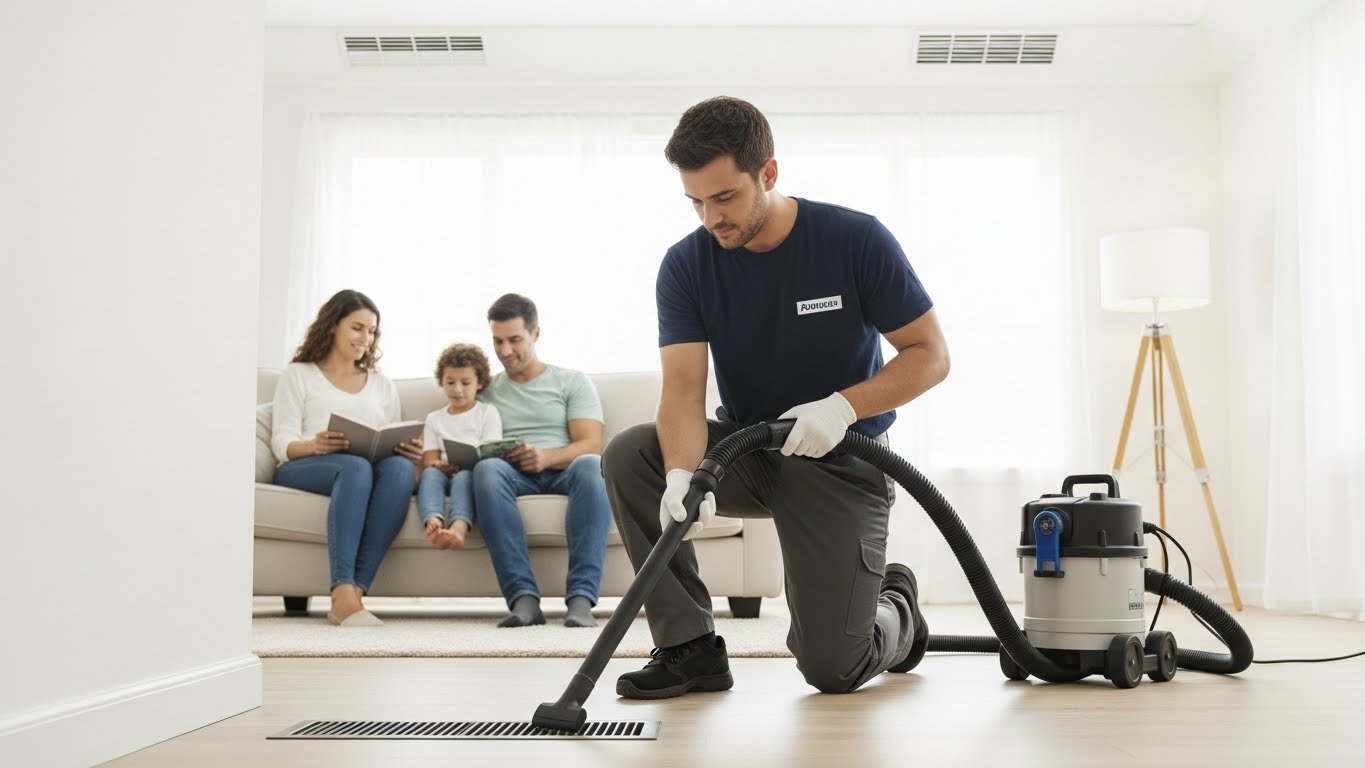
If you’re wondering, “can u stay home when air ducts need cleaning,” the short answer is usually yes. Most homeowners remain on-site while professionals clean the ductwork.
The process can be noisy and a bit dusty around registers, but modern equipment uses negative pressure and HEPA filtration to keep debris contained. With a little prep and awareness, staying home is safe and convenient for most households.
Is It Safe to Stay Home During Duct Cleaning?
In typical situations, yes it’s safe to stay home during air duct cleaning. Reputable companies use negative-pressure vacuums, sealed access points, and HEPA filtration to keep particles from spreading.
Here’s what that means for you:
- Airborne dust is minimized as debris is pulled into sealed equipment.
- Vents are covered or sealed while technicians work on each run.
- Work zones are localized, so you can move to quieter rooms.
There are exceptions. If you have severe respiratory conditions, chemical sensitivities, or a newborn, you may want to step out or schedule when vulnerable family members won’t be home. It’s your call, but preparation and a quick pre visit conversation with the company make a big difference.
Who Should Consider Stepping Out
While most people can stay, some situations call for extra caution:
- People with asthma, COPD, or severe allergies: Even with HEPA filtration, a small amount of dust can escape when registers are opened.
- Infants and elderly family members: Their respiratory systems can be more sensitive.
- Anyone with chemical sensitivities: If optional disinfectants or sealants are used, consider fresh air breaks or stepping out.
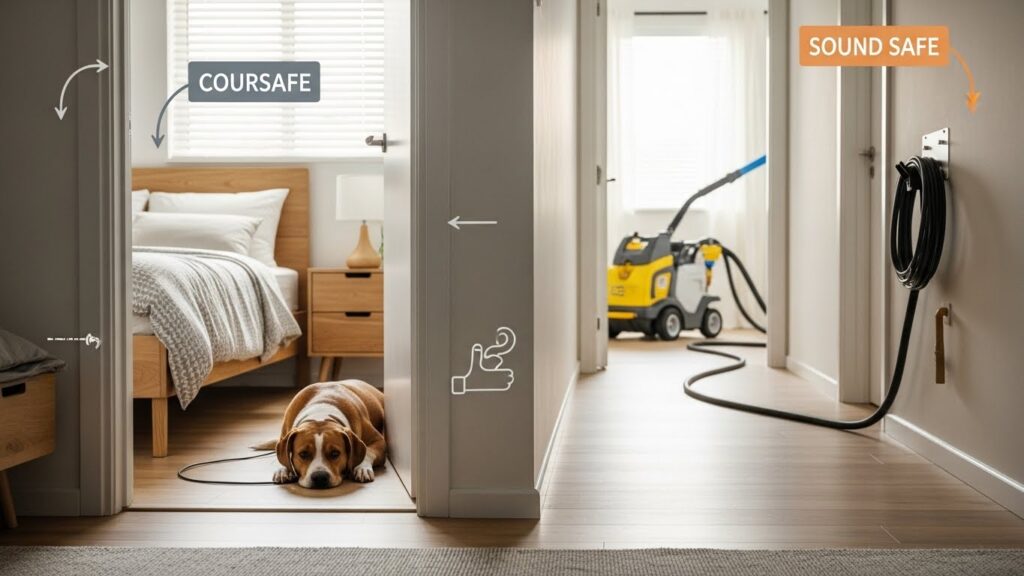
- Pets: Loud equipment can stress animals. Crate them in a quiet room, take them for a walk, or visit a friend for a few hours.
If any of these apply, ask the provider to:
- Confirm HEPA filtration on all vacuums.
- Skip antimicrobial sprays unless medically necessary and requested.
- Use low-odor or no added fragrance products.
- Provide extra containment around the work area.
How to Prepare Your Home (30-Minute Checklist)
A little prep helps the day run smoothly and keeps dust contained.
- Clear access: Move small furniture away from vents, returns, and the furnace/air handler (3–4 feet of clearance is ideal).
- Protect valuables: Cover electronics and delicate décor near registers with a light cloth or towel.
- Replace or remove filters: Ask your technician whether to remove the filter before they arrive. Have a fresh filter ready for after the cleaning.
- Tidy the path: Pick up toys, cords, and rugs along hallways where hoses will run.
- Secure pets: Crate, close in a room, or arrange a short outing.
- Plan your “quiet zone”: Choose a room far from the loudest work and set up what you need laptop, headphones, snacks.
- Ask about parking and power: Clear the driveway if needed; verify access to a standard outlet for equipment.
Quick tip: Take a few “before” photos of vent interiors and the furnace plenum. Ask your tech for “after” photos. It’s a simple way to verify work quality.
What Actually Happens During Professional Duct Cleaning
Knowing the process removes a lot of the guesswork and stress.
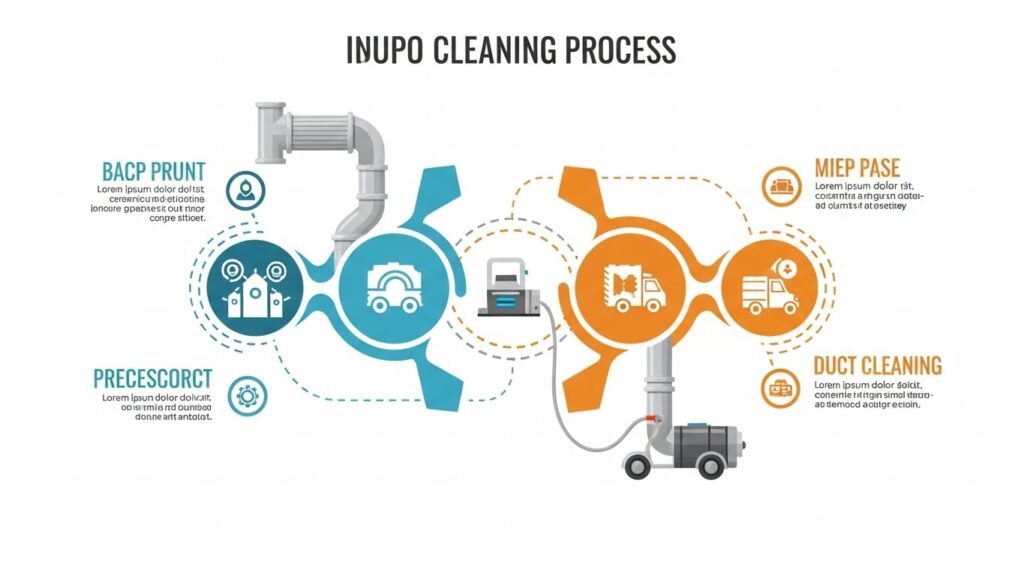
- Inspection: The tech checks vents, returns, and the air handler. They’ll note buildup, debris, or visible mold.
- Containment: Registers are covered, and an access port may be created near the furnace or main trunk.
- Negative pressure: A powerful vacuum, often truck-mounted or a high-grade portable HEPA unit, pulls debris out of the system.
- Agitation: Brushes, air whips, and compressed air tools dislodge dust stuck to metal or flex duct surfaces.
- Component cleaning: Coils, blower, and drain pan may be cleaned if included in your service.
- Final sweep: The system is rechecked, vents are reinstalled, and a new filter is added.
Expect intermittent noise, footsteps, and open doors while equipment is set up. Typically, you can hang out in a different room or work from home without much disruption.
Health, Safety, and Air Quality Tips
Maximize comfort and safety if you’re staying home:
- Ventilation: If weather allows, crack a window in rooms where you’ll be sitting.
- Close interior doors: Keep doors closed between the active work zone and your “quiet zone.”
- Skip sprays unless needed: Disinfectants and sealants aren’t always necessary. If used, choose low-VOC products.
- Filter upgrade: After cleaning, consider a quality pleated filter (MERV 8–11 for most homes; verify your HVAC specs).
- Post-clean run: After the crew leaves, run the HVAC fan for 15–30 minutes with a fresh filter to capture any stragglers.
Time, Cost, and After-Service Expectations
- Time: Most single-family homes take 2–4 hours. Larger homes or complex systems can take 4–6 hours.
- Cost: Prices vary by region, home size, and scope. Many reputable companies charge a flat rate per system. Be wary of “whole house cleaning for $99” ads those are often bait-and-switch.
- After service air: You might notice a faint dusty smell for a few hours, like a just-cleaned attic. This should dissipate quickly.
- Post-clean filter check: Inspect your filter after a week; replace again if it looks gray or fluffy.
Red flags to watch for:
- No mention of negative pressure or HEPA filtration.
- Pushy add ons like biocides or sealants without clear evidence they’re needed.
- No before/after photos or an unwillingness to explain the process.
Common Mistakes to Avoid
- Not asking about credentials: Look for NADCA-trained or similarly certified technicians.
- Forgetting access: If vents are blocked by furniture or bookcases, crews can’t clean thoroughly.
- Skipping the filter: Using an old, clogged filter after a cleaning defeats the purpose.
- Ignoring the root cause: If ducts are excessively dusty, check for leaky returns, poor filtration, or heavy renovation dust.
Frequently Asked Questions
Can I work from home while the ducts are cleaned?
Yes, most people can. The process is noisy, but you can set up in a room away from the work area. Noise-canceling headphones help. Ask the crew to clean your office room last.
Is duct cleaning safe for kids and pets if we stay home?
Generally, yes. Keep kids and pets in a closed room away from equipment and hoses. If anyone has respiratory issues, consider a short outing during the noisiest phase.
Will duct cleaning make my house dusty?
A small amount of dust may stir when registers are opened, but proper negative pressure and HEPA filtration minimize it. Cover nearby items and run the fan with a fresh filter afterward.
How often should my air ducts be cleaned?
For most homes, every 3–5 years is common. Sooner if you’ve had renovations, pets that shed heavily, visible debris from vents, or a new home purchase with unknown history.
What should I ask a duct cleaning company before hiring?
Ask about equipment (HEPA and negative pressure), scope (vents, returns, blower, coils), photos, pricing transparency, and any chemicals used. Request a written estimate and timeline.
Conclusion & Next Steps
If you’ve been asking, “can you stay home when air ducts need cleaning,” the answer is yes for most households especially when you prep, use a certified company, and set up a quiet space. If anyone in your home is sensitive to dust or chemicals, plan short breaks outside or step out for part of the visit.
Clean ducts support better airflow and comfort. A simple checklist, clear questions, and a fresh filter after the job go a long way.
Ready to schedule or get a second opinion? Reach out to a reputable, certified provider and ask for photos, clear pricing, and HEPA based methods.
Call-to-Action
Want a cleaner, quieter service day? Contact a trusted local duct cleaning pro, ask about HEPA negative pressure and before/after photos, and book your preferred time window today.
Suggested Resources
- [LINK: EPA guidance on air duct cleaning -> https://www.epa.gov/indoor-air-quality-iaq/should-you-have-air-ducts-your-home-cleaned]
- [LINK: NADCA consumer tips -> https://nadca.com/homeowners]
- [LINK: Improve indoor air quality at home -> https://www.cdc.gov/air/indoor-air-quality/index.html]
- [LINK: How to choose an HVAC filter (internal) -> https://thecleaningcaddypanama.com/services/hvac-maintenance-in-panama-city-beach-fl/]
- [LINK: Seasonal HVAC maintenance checklist (internal) -> https://thecleaningcaddypanama.com/services/hvac-maintenance-in-panama-city-beach-fl/]