
When dust, pet dander, and construction debris settle inside your HVAC system, they don’t just sit quietly. They travel through your home, cling to coils, and make your system work harder. If you’re asking, “what is the best air duct cleaning method,” you’re not alone. The short answer: a professional source removal process using strong negative pressure (vacuum) plus mechanical agitation, performed to recognized standards. The long answer what it includes, when to use it, and what to avoid is what this guide is all about.
A Quick Story: The Day the Dust Finally Left
Two weeks after a remodel, Mia noticed a fine gray film settling back on her books the day after dusting. Her son’s allergies flared, the return vent whistled, and the system seemed to run longer than usual. She swapped filters, vacuumed vents, even taped around a register but nothing changed.
A local pro came by with a camera. Inside the main trunk line, Mia saw layers of drywall dust and pet hair clinging to the seams like lint on a sweater. The technician explained how they’d place the system under negative pressure, agitate the debris with air whips and rotary brushes, and capture everything in a HEPA filtered unit. No foggy “freshener,” no shortcuts.
Three hours later, the before/after photos were jaw-dropping. The air felt less stale, the whistling stopped, and dusting became a weekly chore again not a daily one. That day, she learned there’s more to “duct cleaning” than a shop vac and a deodorizer. There’s a right way and it actually works.
What “Air Duct Cleaning” Really Means
Air duct cleaning refers to removing dust, debris, and contaminants from the components of forced air HVAC systems. That includes supply and return ducts, registers, grilles, diffusers, heat exchangers, coils, drain pans, fan motor and housing, and the air handling unit housing.
Not all cleanings are equal. Some companies rely on portable vacuums and a quick pass with a brush. Others follow a thorough, standards based process with powerful negative pressure and mechanical agitation to dislodge and capture particles safely. The latter is the gold standard.
The benchmark most pros reference is source removal physically extracting contaminants from the duct system so they can’t reenter your living space. It’s often performed using a high-powered truck mounted vacuum or a portable HEPA negative air machine, coupled with tools that agitate debris off surfaces so it can be removed under suction.
How to Judge the “Best” Method
- Proven to remove debris from the entire system, not just vents
- Uses negative pressure to pull particles away from living areas
- Includes mechanical agitation to release stuck on dust from duct surfaces
- Complies with reputable standards and best practices
- Uses HEPA filtration to capture fine particles
- Provides visual verification (camera or clear before/after photos)
In short, the best method is one that does the job thoroughly and safely from the blower to the branch lines and proves it.

The Methods Compared: What Works, What’s Overhyped
1) Source Removal with Negative Pressure + Mechanical Agitation (Best Practice)
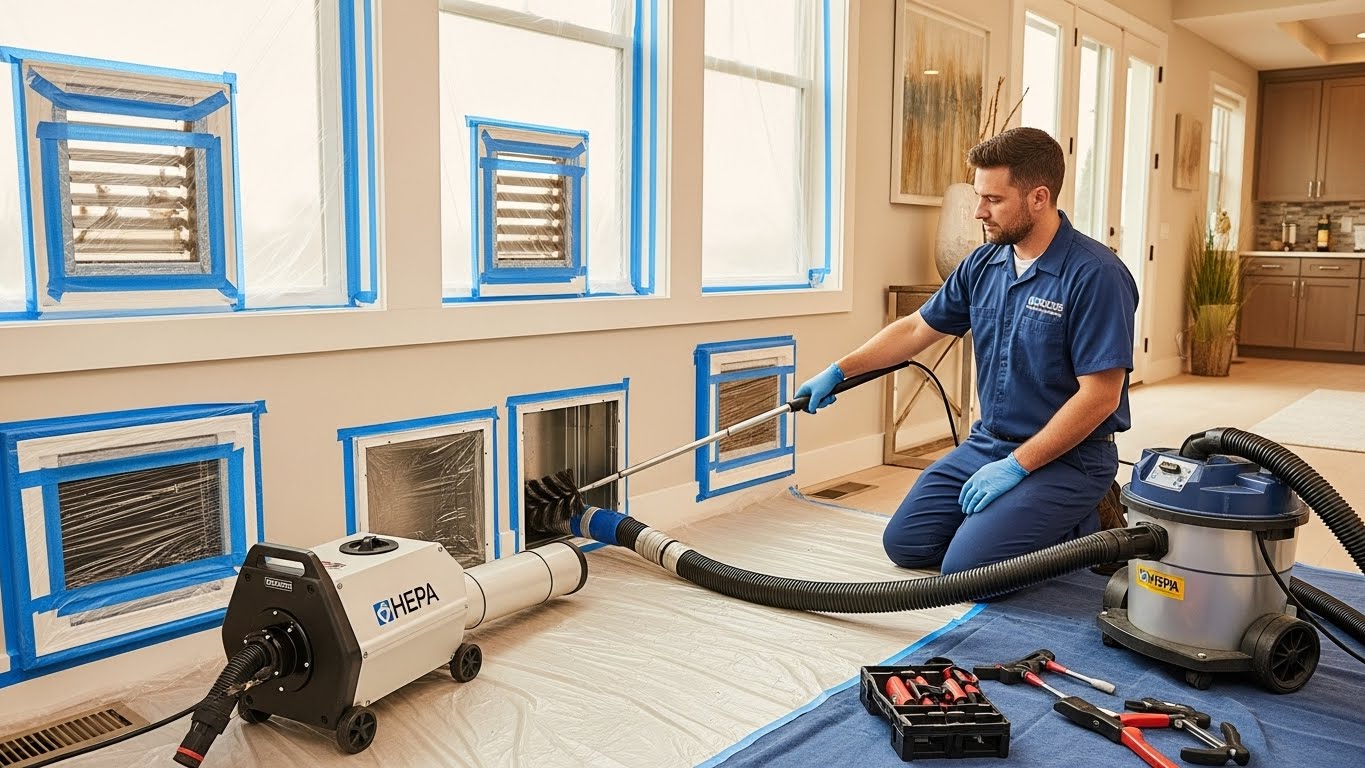
This is the industry recommended method. A powerful vacuum (truck-mounted or portable HEPA unit) creates negative pressure in the duct system. Technicians then use agitation tools rotary brushes, air whips, skipper balls to dislodge debris so the vacuum can carry it away. Registers are sealed to maximize suction at the work area.
Why it’s best:
- Captures particulate at the source, minimizing release into rooms
- Reaches deep into trunk lines and branches
- Compatible with metal duct, duct board, and flex, when performed correctly
- Supported by industry standards and widely used by certified pros
Where it shines: Post-renovation dust, heavy pet hair, long intervals between maintenance, or visible dust/plaster accumulation.
2) Rotary Brush Only or “Brush and Vac” Systems
Rotary brush systems can be effective when paired with proper negative pressure and HEPA filtration. The brush loosens debris, and the vacuum captures it. However, brush only approaches (no negative air) risk redistributing dust and can damage fragile flex duct if handled poorly.
Pros:
- Effective on many metal ducts when used within a negative pressure setup
- Good for localized buildup
Cons:
- Without strong suction/HEPA capture, dust can blow into rooms
- Risk of tearing older or thin flex duct
3) Compressed Air Tools (Air Whips, Skipper Balls)
Compressed air agitators “whip” debris off duct surfaces. When combined with negative pressure, they’re excellent at dislodging fine dust and light to medium buildup. They’re gentler than brushes on some materials, but may struggle with heavy, sticky contaminants if used alone.
Pros:
- Great for delicate ducts and thorough coverage
- Excellent when paired with high CFM negative air
Cons:
- Not ideal for thick, greasy buildup without brushing
4) Contact Vacuuming Only
Some services rely on hand-held vacuums and a few access points. While contact vacuuming can tidy registers and nearby duct openings, it rarely reaches far into branch lines or main trunks.
Pros:
- Fine for minor touch ups or spot cleaning
Cons:
- Not a full-system clean
- Can miss the majority of contaminants deeper in the system
5) Chemical Fogging, Deodorizers, and Biocides
Fogging products may be marketed as “sanitizers” or “mold treatments.” Here’s the truth: fogging alone does not remove debris. At best, it’s an add-on after a thorough physical cleaning, and only when there’s a justified need (e.g., microbial growth) and an approved product for the application. Unnecessary chemical use may introduce odors or irritants.
Pros:
- May be appropriate in targeted, post clean scenarios with the right product
Cons:
- Doesn’t replace physical debris removal
- Some products are not approved for HVAC use; verify labels and necessity
6) Steam Cleaning
Steam can damage duct materials, add unwanted moisture, and encourage future microbial growth if not thoroughly dried. It’s typically not recommended for ducts.
7) Robotic Tools and Cameras
Robotic brushes and inspection cameras can enhance a proper source removal process especially in large commercial systems or tight ducts. They’re tools, not methods. Their value depends on the process they support.
So, What Is the Best Air Duct Cleaning Method?
The best method is a standards-based source removal process that combines negative pressure (from a truck-mounted or portable HEPA vacuum) with mechanical agitation (rotary brushes, air whips, skipper balls). It should include the air handler, blower, coils, drain pan, supply and return trunks, and all branch lines. The job should end with visual verification camera footage or clear before/after photos.
This approach physically removes the dust, dander, and debris that cause odors, clog filters, and coat coils. When done correctly, it protects indoor air quality and supports HVAC efficiency.
Step-by-Step: How a Proper Cleaning Should Work
1) Assessment and Access
- Inspect ducts and air handler with a camera or mirror
- Identify duct materials (metal, flex, duct board) and any damage
- Create access openings where needed; protect with code-compliant doors/covers afterward
2) System Protection and Containment
- Turn off HVAC; protect sensitive components
- Seal supply registers and returns to maximize suction
3) Establish Negative Pressure
- Connect truck-mounted or portable HEPA vacuum to the main trunk/return
- Confirm strong airflow and filtration
4) Mechanical Agitation
- Use air whips, skipper balls, and/or rotary brushes to dislodge debris
- Work methodically from branch lines toward the main trunks
- Clean supply and return sides, plus the blower housing and evaporator coil (as appropriate)
5) Source Removal and Collection
- Continually capture dislodged material via negative air
- Empty collection bags/containers safely; prevent recontamination
6) Coil, Blower, and Cabinet Care
- Clean coils and blower assemblies using approved methods
- Clear and treat the drain pan if needed; confirm drainage
7) Sealing and Restoration
- Close access openings with proper doors; reseal joints as needed
- Replace or upgrade filters (MERV 8–13 for most homes, as recommended)
8) Verification
- Provide before/after photos or video
- Walk through findings and maintenance suggestions
Benefits of a Thorough, Standards-Based Cleaning
- Better indoor air quality: Less dust and allergens circulating through rooms
- Improved airflow and efficiency: Clean coils and ducts reduce strain on the system
- Longer equipment life: Motors and coils aren’t fighting debris
- Fewer odors: Source removal reduces stale or musty smells
- Confidence in results: Visual proof and measurable improvements

What It Costs, How Long It Takes, and How Often to Do It
- Cost: For an average single family home, expect a professional, full system cleaning to range roughly from $450 to $1,000+, depending on home size, system complexity, regional labor rates, accessibility, and added services (e.g., coil cleaning, sanitizer when justified).
- Time: A thorough job typically takes 2–5 hours for a single system home. Larger homes or complex layouts can take longer.
- Frequency: There’s no one-size fits all schedule. Many households do well with a cleaning every 3–5 years. Consider sooner if you’ve had renovation dust, pets that shed heavily, smoke exposure, water damage, vermin activity, or visible debris.
Red Flags and Common Mistakes to Avoid
- Ultra-cheap “whole house” specials: Prices like $99 rarely cover full system, standards based work. Expect upsells and shortcuts.
- No negative pressure or HEPA filtration: Dust can blow into your home.
- Fog only “cleaning”: Deodorizers without debris removal don’t solve the problem.
- No photos or video: If you can’t see it, you can’t verify it.
- Aggressive brushing on fragile flex duct: Can tear the liner ask about method adjustments.
- No attention to the air handler, coil, or blower: Cleaning just the ducts isn’t enough.
Special Cases: Mold, Asbestos, and Contamination Events
- Mold: True mold growth needs moisture control first. Cleaning without fixing leaks or humidity issues is a temporary bandage. If growth is confirmed, use proper remediation protocols and products rated for HVAC use after physical cleaning.
- Asbestos or suspect materials: Don’t disturb. Call licensed abatement pros. Some older duct insulation or tape can contain asbestos.
- Vermin and water damage: Address the source first. Then clean and sanitize as needed with approved products.
- Fire or smoke events: Residue can require specialized cleaning and filtration replacement; standards based source removal is essential.
Maintenance to Keep Ducts (and Air) Cleaner
- Filter upgrades: Use a quality pleated filter (MERV 8–13, as your system allows). Check monthly; replace every 1–3 months or as recommended.
- Seal and insulate: Repair duct leaks, especially in attics or crawl spaces, to prevent drawing in dust and fiberglass particles.
- Control dust at the source: Vacuum carpets, wash bedding, groom pets, and use kitchen/bath fans.
- Service the system: Annual HVAC tune-ups keep coils, blower, and drain lines clean and efficient.
- Keep returns clear: Don’t block return vents with furniture; keep a clean space around them.
How to Choose a Qualified Air Duct Cleaning Company
- Certifications and standards: Look for technicians trained to recognized standards and able to explain their process clearly.
- Process transparency: Ask about negative pressure, mechanical agitation tools, HEPA filtration, and scope (including air handler, coil, and blower).
- Proof of results: Request camera inspections and before/after photos.
- Insurance and guarantees: Verify liability coverage; ask about workmanship guarantees.
- Detailed quote: Expect a line-item scope, not a one-line price. Avoid vague “includes everything” claims.
Frequently Asked Questions About the Best Air Duct Cleaning Method
1) What is the best air duct cleaning method for most homes?
A standards-based source removal process using strong negative pressure plus mechanical agitation is best. It physically removes debris from the entire system and captures particles with HEPA filtration.
2) Do I need a truck-mounted vacuum, or are portable HEPA units okay?
Both can work well when used correctly. Truck mounted systems often deliver higher airflow, while quality portable HEPA units excel in tight spaces or high rise buildings. The key is negative pressure and proper agitation.
3) Will duct cleaning reduce my energy bills?
It can help, especially if coils and blower components are dirty and airflow is restricted. Clean components reduce strain and may improve efficiency, but results vary by system condition and maintenance.
4) Is chemical fogging or sanitizer necessary?
Usually not. Fogging is not a substitute for cleaning. Consider it only after thorough debris removal and only when there’s a documented need (e.g., microbial concerns) with products approved for HVAC use.
5) How often should I clean my air ducts?
Many homes do well with cleaning every 3–5 years. You may need it sooner after renovations, pest issues, water damage, or if you notice visible dust, odors, or airflow issues.
Conclusion: The Right Method Delivers Real Results
If you’re still wondering what is the best air duct cleaning method, here’s the bottom line: choose a process that uses negative pressure and mechanical agitation to remove contaminants from the entire system and proves it with photos or video. Skip the shortcuts and fog only “fixes.” When done correctly, you’ll breathe easier, reduce dust, and support your HVAC’s health.
Ready to move forward? Get quotes from qualified pros, compare their processes, and ask for visual verification. Your lungs and your HVAC will thank you.
Call to Action
Want a cleaner, healthier home? Book a standards-based air duct inspection and cleaning today. Ask about negative pressure, HEPA filtration, and before/after photo verification. Get a clear, written scope and peace of mind.
Helpful Links and Resources
- [LINK: EPA guide on air duct cleaning -> https://www.epa.gov/indoor-air-quality-iaq/should-you-have-air-ducts-your-home-cleaned]
- [LINK: NADCA ACR Standard -> https://nadca.com/standards/acr]
- [LINK: HVAC (Wikipedia) -> https://en.wikipedia.org/wiki/Heating,_ventilation,_and_air_conditioning]
- [LINK: How often to change HVAC filters -> https://thecleaningcaddypanama.com/services/hvac-services-in-panama-city-beach-fl/]
- [LINK: Air duct cleaning cost breakdown -> https://thecleaningcaddypanama.com/services/air-duct-cleaning-in-panama-city-beach-fl/]