
Table of Contents
- [Introduction](#introduction)
- [What DIY Duct Cleaning Can (and Can’t) Do](#what-diy-duct-cleaning-can-and-cant-do)
- [Safety First: When to DIY vs. Call a Pro](#safety-first-when-to-diy-vs-call-a-pro)
- [Tools and Supplies Checklist](#tools-and-supplies-checklist)
- [Step-by-Step: Cleaning Supply Registers and Ductwork](#step-by-step-cleaning-supply-registers-and-ductwork)
- [Sanitizing Your Air Ducts Safely](#sanitizing-your-air-ducts-safely)
- [Tips, Troubleshooting, and Common Mistakes](#tips-troubleshooting-and-common-mistakes)
- [How Often to Clean and Signs It’s Time](#how-often-to-clean-and-signs-its-time)
- [Cost and Time: What to Expect](#cost-and-time-what-to-expect)
- [Conclusion](#conclusion)
- [Frequently Asked Questions](#frequently-asked-questions)
- [Helpful Links and Resources](#helpful-links-and-resources)
- [Call to Action](#call-to-action)
Introduction
If you’re tired of dust settling on surfaces days after cleaning, you’re not alone. Many homeowners try do it yourself air duct cleaning and sanitizing to cut dust, reduce odors, and feel better about their indoor air.
Good news: with the right tools, a little patience, and safe techniques, you can tidy up your vents, registers, and accessible duct sections. Even better, you’ll learn what’s safe to DIY and what should stay in a pro’s toolbox. Let’s make this easy and safe.
What DIY Duct Cleaning Can (and Can’t) Do
DIY air duct cleaning can remove loose dust, hair, and light debris near vents, returns, and accessible trunk lines. You’ll likely see less dust on shelves, improved airflow from registers, and fewer stale smells in rooms.
However, DIY is not a cure-all. It won’t fix deep, caked-on debris far inside ducts, heavy construction dust throughout the system, or contaminants like mold. It also can’t replace professional negative air machine cleaning for complex systems.
Here’s what DIY often helps with:
- Light dust and pet hair build up around registers.
- Visible debris near vent openings.
- Odors from spills, smoke, or cooking lingering in grills.
- Improving airflow from partially clogged grilles.
Here’s what DIY usually can’t handle safely:
- Mold, wet insulation, or biological growth.
- Rodent infestations or droppings.
- Asbestos-containing materials or friable duct board.
- Severely dirty systems after renovations.
The goal is to do the right amount safely enough to make a difference without risking your health or your HVAC system.
Safety First: When to DIY vs. Call a Pro
Before you begin, walk your home and inspect your vents and returns. Pop off a grille and use a flashlight to look just inside. If you see shiny dust and fuzz, DIY is likely fine. If you see clumps of black or green spots, wet insulation, or a strong musty smell, call a professional.
Call a pro if you notice:
- Persistent moldy odors or visible growth inside ducts.
- Rodent activity, droppings, or insects.
- Fiberglass duct board that looks damaged or shedding.
- Very poor airflow in multiple rooms, suggesting a deeper blockage.
Safety basics:
- Turn off HVAC power at the thermostat and breaker before opening panels.
- Wear PPE: N95/KN95, safety glasses, gloves, and long sleeves.
- Use a HEPA shop vac if possible to trap fine particles.
- Avoid harsh chemicals or strong fragrances in your air system.
Tools and Supplies Checklist
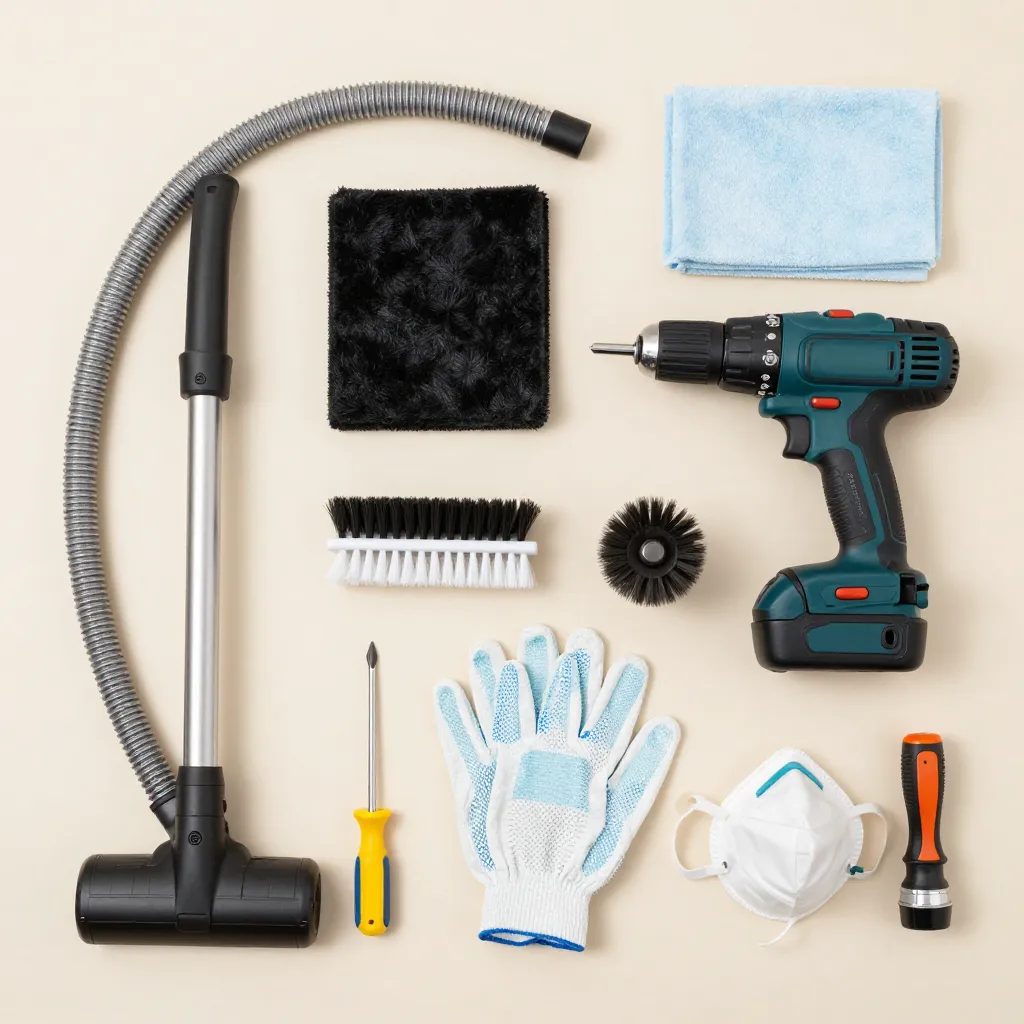
Gather your gear before you start. You don’t need professional equipment to make a noticeable improvement.
Essentials:
- HEPA shop vacuum with hose and crevice tools
- Soft-bristle brush or drill-attached nylon brush (for vents)
- Screwdrivers (Phillips and flathead) or nut driver for grilles
- Microfiber cloths and paper towels
- Flashlight or headlamp
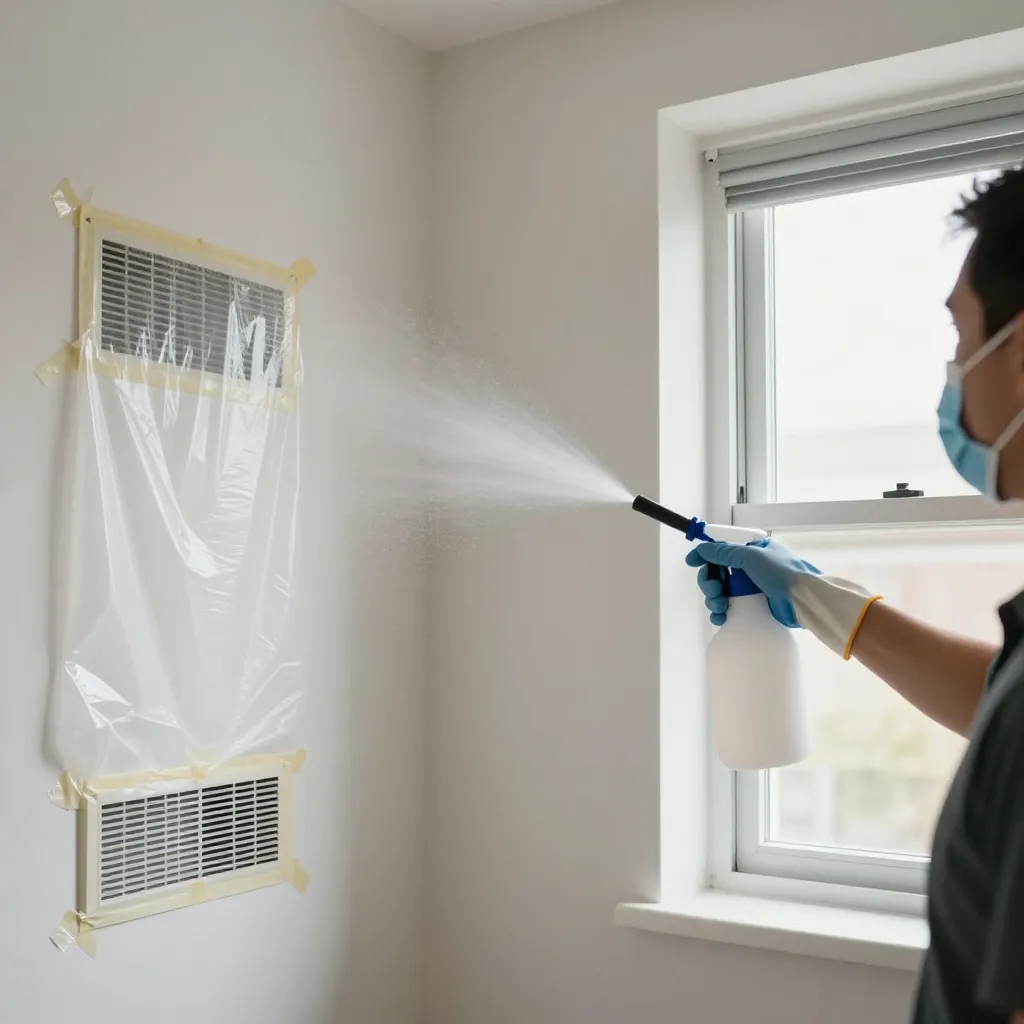
- Painter’s tape and plastic sheeting (to mask vents during sanitizing)
- New, high-quality HVAC filter (MERV 8–11 for most homes)
- EPA registered disinfectant suitable for HVAC surfaces (non-fragranced, non corrosive; check label for HVAC/soft metal compatibility)
- PPE: N95/KN95, safety glasses, gloves
Nice to have:
- Compressed air canister for corners
- Small handheld fogger compatible with your disinfectant (optional; follow label)
- Flexible dryer/duct brush with extension rods (nylon bristles only)
Step-by-Step: Cleaning Supply Registers and Ductwork
Use this simple sequence to remove dust without pushing debris deeper.
1) Power down and protect
- Turn off the system at the thermostat and breaker.
- Cover furniture under vents with a sheet or towel.
2) Remove and clean registers
- Unscrew supply and return grilles.
- Wash grilles with warm soapy water, rinse, and dry.
- For stubborn grime, use a soft brush; avoid scratching finish.
3) Vacuum the accessible duct openings
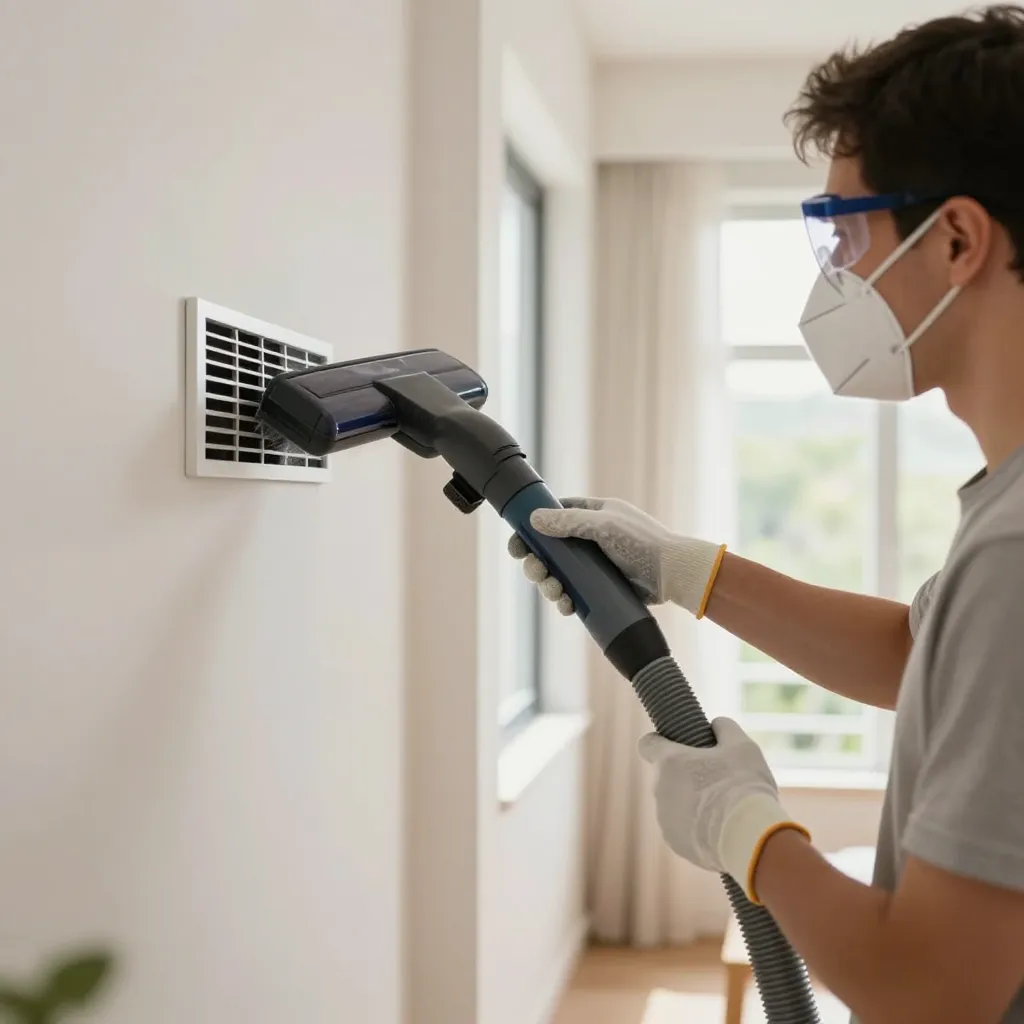
- Use a HEPA shop vac with a crevice tool.
- Gently vacuum 2–6 feet inside the duct, rotating the nozzle.
- Loosen debris with a soft brush or flexible nylon rod. Don’t use metal.
4) Clean returns carefully
- Returns collect more dust. Brush lightly and vacuum slowly.
- If you see insulation, avoid disturbing it; vacuum around it gently.
5) Wipe the boot and surrounding wall/floor
- Use a damp microfiber cloth for the metal boot and trim.
- Dry thoroughly to prevent rust.
6) Inspect the blower compartment (optional)
- Only if comfortable: open the furnace/air handler panel.
- Gently vacuum loose dust on accessible flat surfaces not electronics or wires.
- If it’s very dirty or oily, stop and call a pro.
7) Replace the HVAC filter
- Install a fresh, properly sized filter with airflow arrow correct.
- This catches the fine particles you stirred up.
8) Reattach registers and test airflow
- Reinstall grilles once everything is dry.
- Restore power and run the fan for 10–15 minutes.
Pro tip: Work room by room. Keep screws in a bowl and label grilles with painter’s tape for quick reassembly.
Sanitizing Your Air Ducts Safely
Sanitizing comes after cleaning. You’re not trying to “perfume” the air. You’re reducing microbes on surfaces you can reach safely.
Key rules for safe sanitizing:
- Choose an EPA registered disinfectant appropriate for HVAC surfaces (check “List N” for disinfectants effective against common pathogens and ensure it’s safe for metals and sealed surfaces per the label).
- Ventilate the area. Open windows and doors where possible.
- Keep people and pets away until the label’s re-entry time passes.
How to sanitize accessible areas:
1) Target surfaces only
- Lightly dampen a microfiber cloth with diluted disinfectant (per label).
- Wipe the metal boot, grille surfaces, and immediate duct lip.
- Avoid soaking insulation or fiberboard; do not saturate.
2) Optional light application inside the duct
- If your product allows, use a fine-mist sprayer to lightly coat the first 2–3 feet of bare metal duct. Less is more.
- Do not spray electronics, blower components, or filters.
3) For returns
- Repeat the same light wipe/spray approach.
- Never fog a whole system unless the product label explicitly allows whole HVAC application and you can isolate zones safely.
4) Dry and reassemble
- Allow surfaces to air dry per label directions.
- Reattach grilles and run the fan to circulate fresh air.
What not to do:
- Don’t use bleach in ductwork it’s corrosive and creates fumes.
- Don’t over-fog or “bomb” the system with fragrances.
- Don’t spray liquids into the blower or onto circuit boards.
Tips, Troubleshooting, and Common Mistakes
Helpful tips:
- Tap registers gently over a trash bag before washing.
- Use a headlamp to see dust ridges at the duct lip.
- Keep the vacuum hose steady to avoid scratching duct walls.
Troubleshooting:
- Still smelling musty? Check the condensate drain and evaporator coil box for standing water.
- Weak airflow? A clogged filter or closed/blocked dampers may be the culprit.
- Dust returns quickly? Increase filter quality (MERV 8–11) and seal leaky return gaps with foil HVAC tape (not duct tape).
Common mistakes to avoid:
- Using scented cleaners that linger in air streams.
- Over-brushing, which can damage duct lining.
- Skipping PPE and stirring up fine particles.
How Often to Clean and Signs It’s Time
For most homes, light DIY cleaning every 6–12 months is enough. Sanitizing isn’t always needed; consider it after illness, smoke exposure, or noticeable odors.
Signs it’s time:
- Dust puffs out when the system starts.
- Pet hair collects at return grilles.
- A stale, smoky, or musty smell near vents.
- Allergy symptoms improve when the system is off.
Also replace filters every 1–3 months, or as recommended by your HVAC manufacturer. It’s the cheapest air quality upgrade you can make.
Cost and Time: What to Expect
- Time: 1.5–3 hours for a 1,500–2,000 sq. ft. home.
- Cost: $50–$200 for supplies if you have a shop vac. Disinfectant and new filters add a little more.
- Difficulty: Moderate. It’s detail work, not heavy labor.
Professional duct cleaning often runs a few hundred dollars or more, depending on system size and contamination. For deep debris, mold, or post-renovation dust, pros are worth it.
Conclusion
Do it yourself air duct cleaning and sanitizing can make your home feel fresher, reduce dust, and support better airflow without overcomplicating the job. Focus on what you can safely reach, use gentle tools and EPA registered products, and stop if you see signs that call for a pro.
A cleaner duct opening and fresh filter can make a bigger difference than you’d expect. Start small, stay safe, and breathe a little easier in every room.
Frequently Asked Questions
Is DIY air duct cleaning safe for most homeowners?
Yes when you focus on accessible areas, use a HEPA shop vac, and wear PPE. Avoid chemicals that aren’t labeled for HVAC surfaces and stop if you see mold or wet insulation.
How often should I sanitize my air ducts?
Sanitizing isn’t necessary every time you clean. Consider it after illnesses in the home, smoke exposure, or persistent odors. Always clean first; sanitize second.
Can I use bleach to sanitize air ducts?
No. Bleach is corrosive and releases strong fumes in confined ductwork. Choose an EPA registered disinfectant that’s suitable for metals and HVAC components per the label.
What’s the best filter to use after cleaning?
For most homes, a MERV 8–11 pleated filter balances filtration and airflow. Very high MERV filters can restrict airflow if your system isn’t designed for them.
When should I hire a professional instead of DIY?
Call a pro if you suspect mold, pests, heavy renovation dust throughout, or damaged duct materials. If you’re unsure, a quick inspection quote can save time and risk.
Helpful Links and Resources
- [LINK: EPA Should You Have the Air Ducts in Your Home Cleaned? -> https://www.epa.gov/indoor-air-quality-iaq/should-you-have-air-ducts-your-home-cleaned]
- [LINK: EPA List N Disinfectants for Use -> https://www.epa.gov/pesticide-registration/list-n-disinfectants-use-against-sars-cov-2]
- [LINK: NADCA Why Clean Air Ducts -> https://nadca.com/homeowners/why-clean-air-ducts]
- [LINK: HVAC Maintenance Checklist -> /blog/hvac-maintenance-checklist]
- [LINK: How to Replace HVAC Filters -> /blog/how-to-replace-hvac-filters]
Call to Action
Ready to tackle your first do it yourself air duct cleaning and sanitizing project? Grab a fresh filter, set aside an afternoon, and start with two rooms. If you’d like a printable checklist or product recommendations, reach out and we’ll send you a simple, safe starter kit list.